Journey to 26.2
Jan 2024 - Oct 2025
Background
On October 26th, 2025, I took on the most daunting personal challenge of my life to date - running the Marine Corps Marathon in Washington, DC. This effort was the culmination of 4 intense months of training, 18 prior months of endurance building, and a rollercoaster of emotions designing and executing my way to running 26.2 continuous miles. Below, I detail my mental and physical journey from despising running, to welcoming it occasionally, to taking on my first race, and to finally completely a full marathon (something I never imagined accomplishing in my wildest dreams).
Role: Marathon Researcher, Experience Designer, and Executor
Skills: Mental Toughness / Physical Endurance / Experience Design / Personal Leadership
Team: My family, friends, and me
I’ve always loved challenging my mind and body to do hard things. My childhood involved lots of tennis and physical conditioning. I’d often play tennis 6-7 days a week, endure 3 hour matches, and run a timed 1-2 miles a week. While I put my all into those timed runs, I dreaded it EVERY. SINGLE. WEEK. I couldn’t wrap my mind around how people ran long distances. I felt like some were built for running, but not me.
It wasn’t until I became roommates with an ultra-marathon runner during college that I started to warm up to running slightly longer distances. I was inspired and eager to challenge myself further. From time to time, I’d pop in a playlist, set off for 3-4 miles, and come back huffing, puffing, and dripping in sweat. While I was proud of my progress, being able to run more than that still felt like a pipe dream.
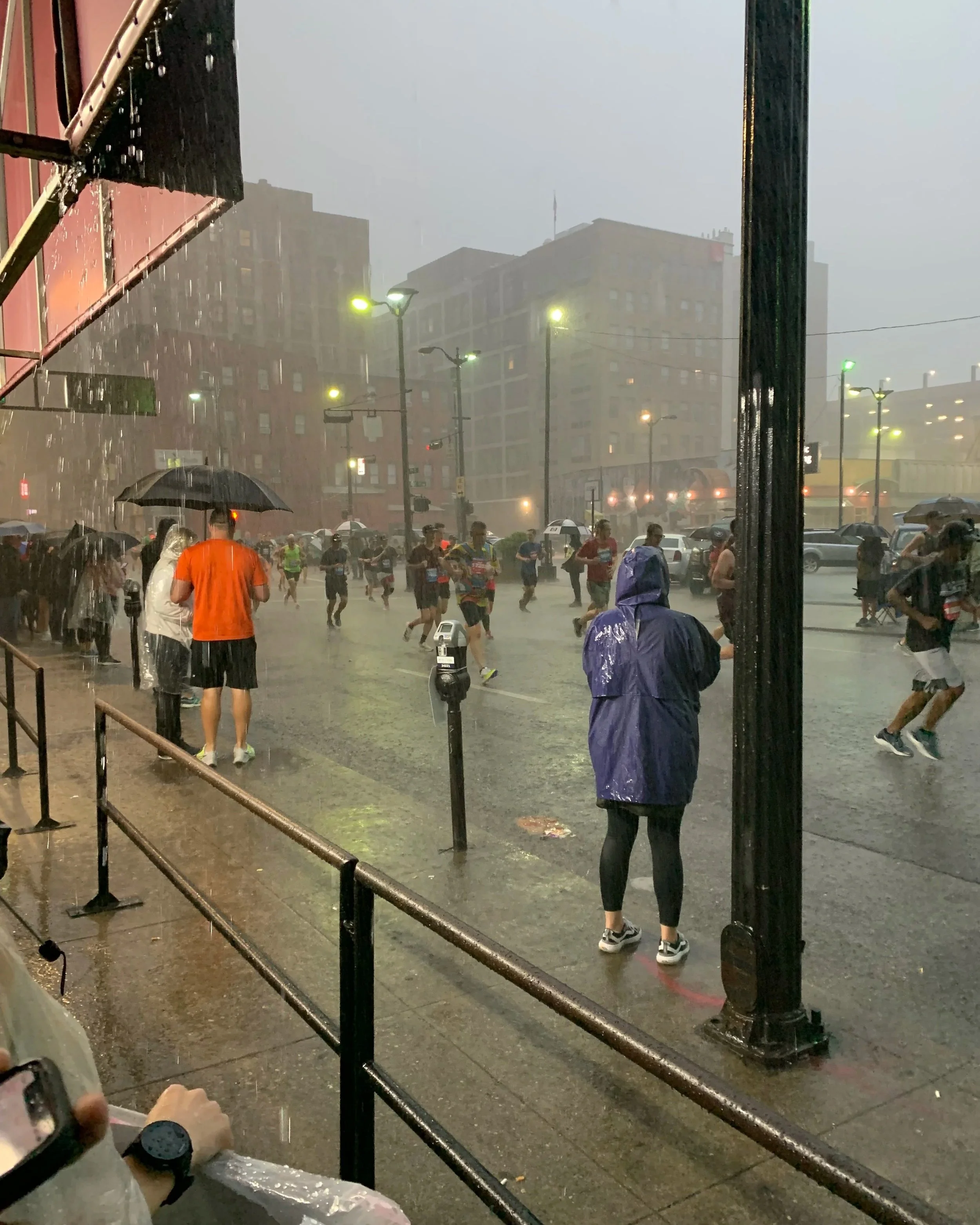
The left picture was taken in May 2023 during the Flying Pig Marathon in Cincinnati, my hometown. I was out supporting a few of my runner friends through a torrential downpour that morning, sloshing through puddles and soggy shoes. Despite the dreary weather, the energy was electric, bright, and invigorating. The community emanated strength and resilience, and I was eager to be a part of it. Not knowing when or how it would happen, I added running a half marathon to my bucket list.
FindING Community
In January 2024, I decided to sign up for the Flying Pig Half Marathon in Cincinnati, OH on a whim. I was excited but also terrified. The only race I’d every run was a 5k. I was clueless as to where to even start with my training. I researched running groups around my area, and Fleet Feet happened to have a dedicated training program specifically for the Flying Pig Half and Full Marathon. I attended a trial run with the Fleet Feet group and was thoroughly impressed. They had mile pace groups by 30 second increments, a dedicated app with the full training schedule and automated workout tracking, and many of their runners had run multiple marathons. It was a bit intimidating, but I knew I could learn a lot from the other runners, benefit from a strong community, and trust a vetted training plan made by experts.
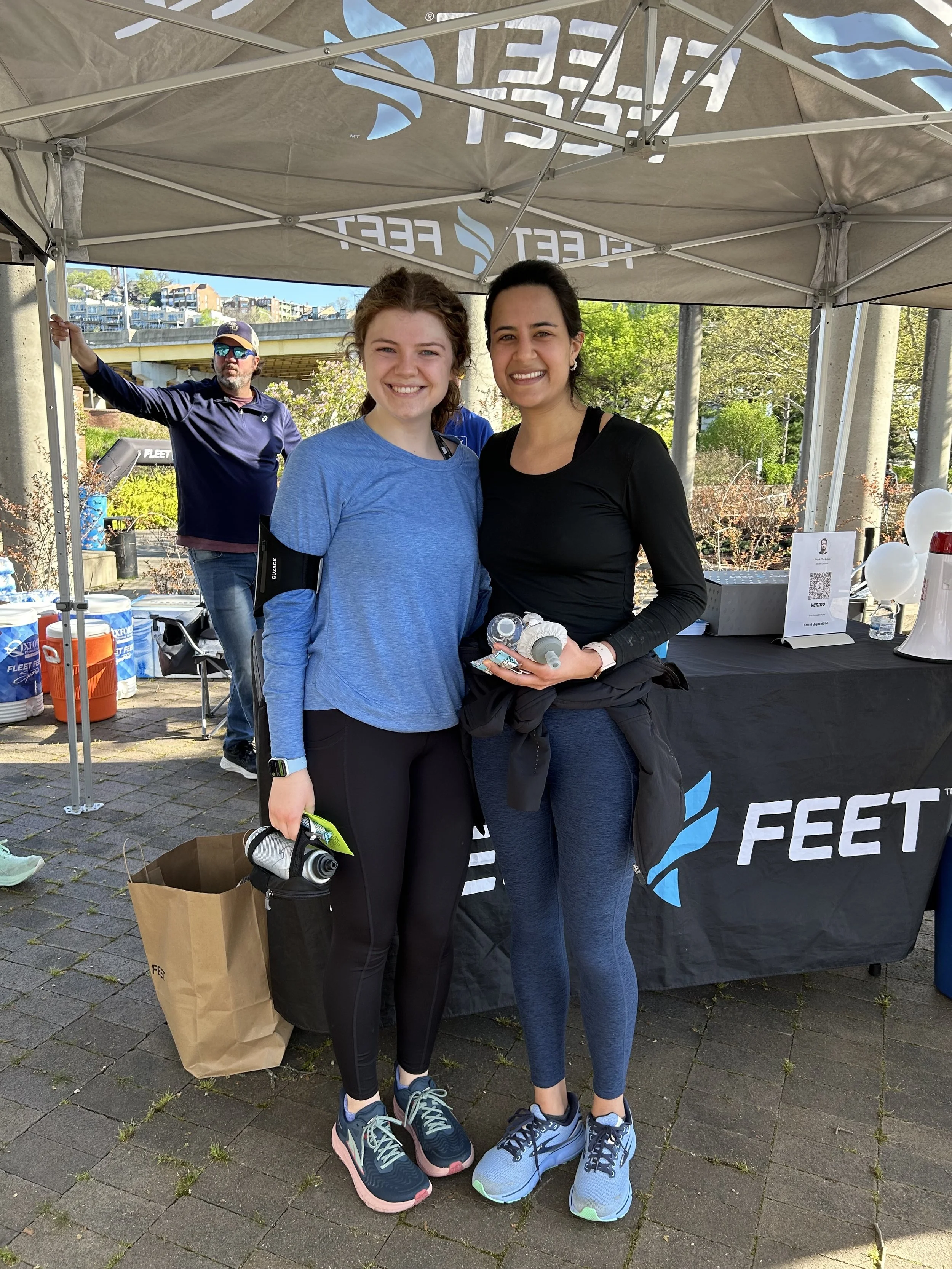
I took a chance on training with Fleet Feet, and I’m so glad I did. I met Abby, one of my closest friends to this day (shown in the picture on the right), got introduced to the exceptional running community on Strava, and felt supported and confident as I tackled the expert training plan carefully crafted by the Fleet Feet team. Both the in-person Fleet Feet community and the digital Strava community kept me motivated, healthy, and accountable from training to race day.
First Half Marathon
When I began my training, I had no idea how much planning and preparation I’d be doing over the next few months outside of simply following the schedule. My weekly training schedule typically consisted of 3-4 days of running. I would have one or two easy, slow runs, one hill or fast-paced run, and one longer run per week. However, I quickly realized that successfully and healthily executing this schedule would require me to figure out quite a few additional things:
Proper fuel before, during, and after runs: I chose a bagel and banana right before, Honey Stinger chews during, and a Body Armor Lyte + something protein/carb heavy after.
How to carry water and my phone on me during longer runs: I used a handheld, squishing bottle for water and a Spibelt to carry my phone around my waist.
My optimal post-run stretching routine: Tom Merrick’s 15 minute runners flexibility routine kept my body feeling fresh and healthy.
Appropriate winter running gear and good running shoes: I invested in a warm running jacket, winter running headbands to cover my ears, and running gloves. I used the Brooks Ghost 15 model for my shoes. ran my very first half marathon.
Ensuring a happy stomach before runs: I religiously ate 3 prunes the night before every long run and the same meal the night before.
Workout tracking: I discovered Strava and loved to stats it provided as well as the community I could build on the platform. I’ve used it ever since.
RACE DAY
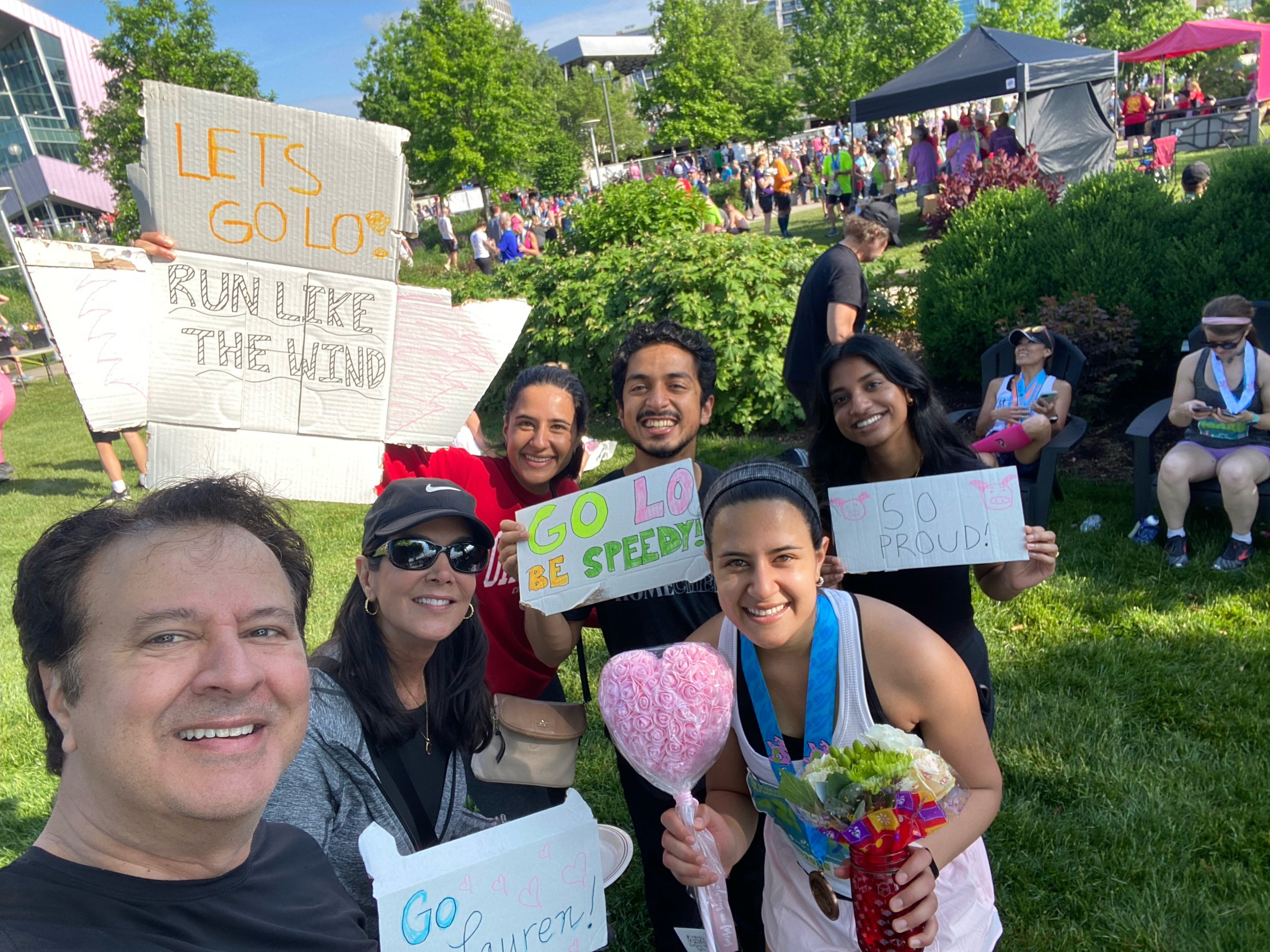
It was a beautiful, sunny day, and the morning started off perfectly cool. I set out with an aggressive 9 min mile pace, aiming to finish in 2 hours. My early miles felt great. At mile 6, there was a continuous 1.5 miles uphill, requiring significant physical exertion, and I push my body to it’s limits. However, I felt confident here, as I had practiced on this very same hill countless times during hill training runs. From there, it was quite a bit of downhill and I was nearing the finish. I felt incredible to see my family and friends several times throughout the race. I got a boost of energy each time I ran past them. The final couple miles were super tough with the humidity and temperature rising. I pushed through with everything I had, and I finished with a time of 1:59:47, just under my sub-2 hour goal. The crowd support and energy was electric, and I knew another race was in my future.
Second Half Marathon
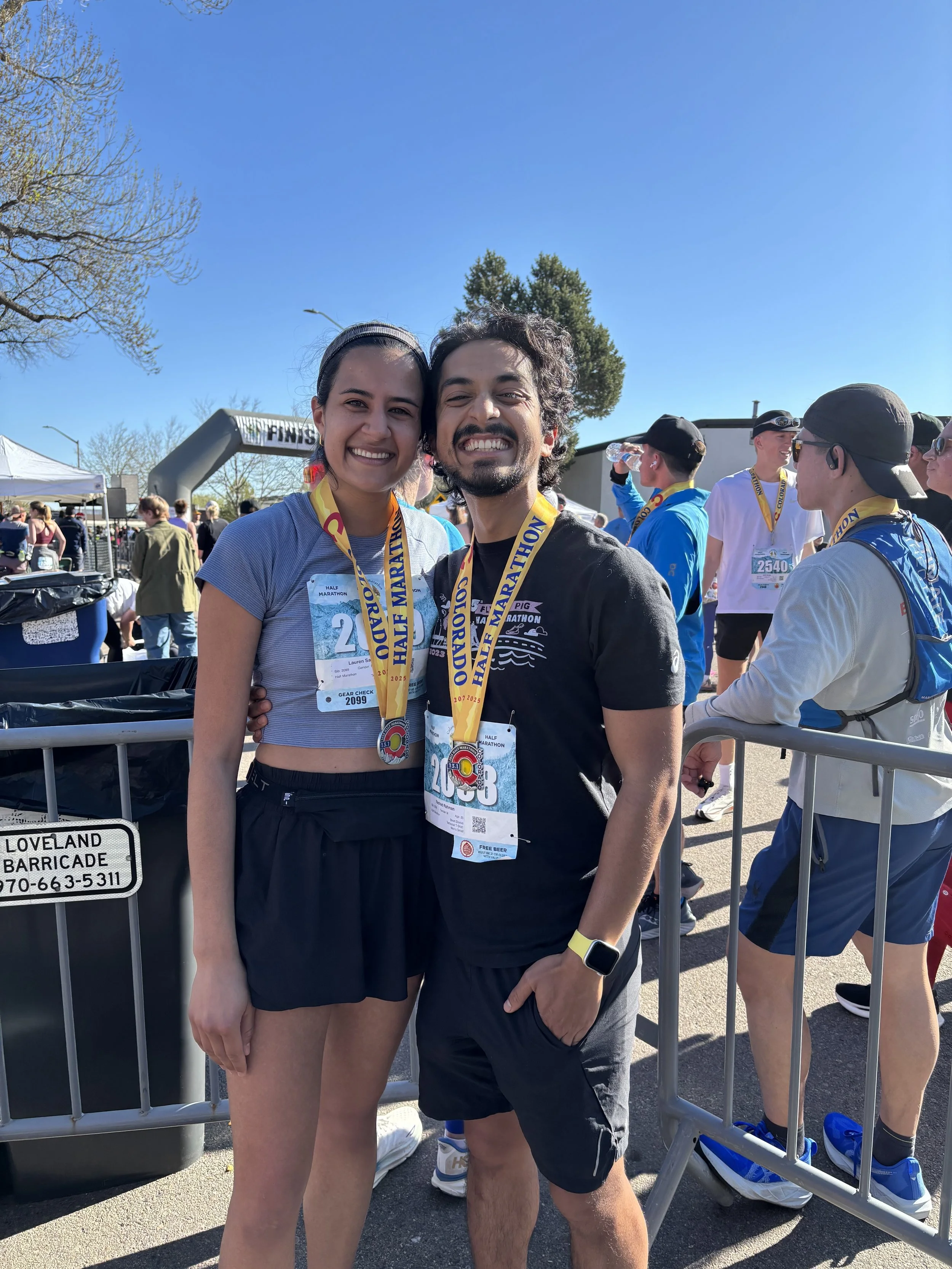
In January 2025, I decided it was time for half marathon #2. However, this time, I wanted to run the scenic Colorado Half Marathon in Fort Collins, Colorado which also meant running at altitude. I had to train appropriately. I followed a very similar schedule to my first half, but I aimed for slightly faster times and ran in Colorado approximately one week per month, allowing me to acclimate to high altitude running.
RACE DAY
The start was tough. It was quite chilly up in the mountains on race day morning, hovering around 40 degrees Fahrenheit. Additionally, I had forgotten my headphones, and despite eating a solid meal the night before, my stomach was not cooperating. I felt antsy on the car ride up and full of nerves. However, I knew much of the course was supposed to be downhill, so I had something working in my favor. I started out strong at an 8 minute mile pace. However, 4 miles in, I had to stop for a bathroom break. Luckily, I felt so much better from there. That’s not to say it was easy though. I was pushing myself hard to maintain a 8:30 pace. It took all of my willpower to continue running with my heart rate rising, no headphones, and very limited crowd support. Reaching the finish line felt like winning the lottery. I finished with a time of 1:51:14, shaving over 30 seconds per mile off of my first half marathon time, and I left proud of my perseverance that day.
First FUll Marathon
I contemplated whether to sign up for a full marathon for weeks. After all, it was a half marathon that I’d added to my bucket list, and I’d accomplished that. However, there was a little piece of me that was still craving more. That feeling continued to grow, and I soon found myself signed up to run the full Marine Corps Marathon in Washington, DC on October 26th, 2025. I knew training for a full marathon would be different from a half, but I didn’t know just quite how different it would be. I began my four month long training in July, and from the start, felt like my life revolved around my training schedule. I was running 5 days a week with three easy runs, one internal run, and one long run a week. Both the mental and physical preparation were equally important. Some additional things I had prepare for this time around are below:
Eating enough calories: Needless to say, marathon training requires serious caloric intake. Protein shakes (I used Orgain protein powder) and protein bars (RX bars were my top choice) became part of my daily routine. I also made sure my meals were rich in lean protein and carbohydrates (Air-fryed regular and sweet potatoes became my best friends).
Investing in a vest (no pun intended): This was one of the best decisions I made. I was able to carry two 500 ml pouches on the front and 1.5 liters on my back. This was a game-changer for ensuring I stayed hydrated on runs.
Adjusting my nutrition source during runs: It became essential for me to fuel with the right balance of hydration, electrolytes, and sugars. The endurance fuel powder by Tailwinds kept me feeling strong and balanced, even as my mileage grew. I mixed the powder directly into my water pouches and aimed to drink 500 ml per hour (one good sip per mile) for easy fueling during runs.
Facing the mental barrier of increased mileage: I ran my long runs with friends whenever possible, found my favorite running playlists, and listened to countless podcasts.
RACE DAY
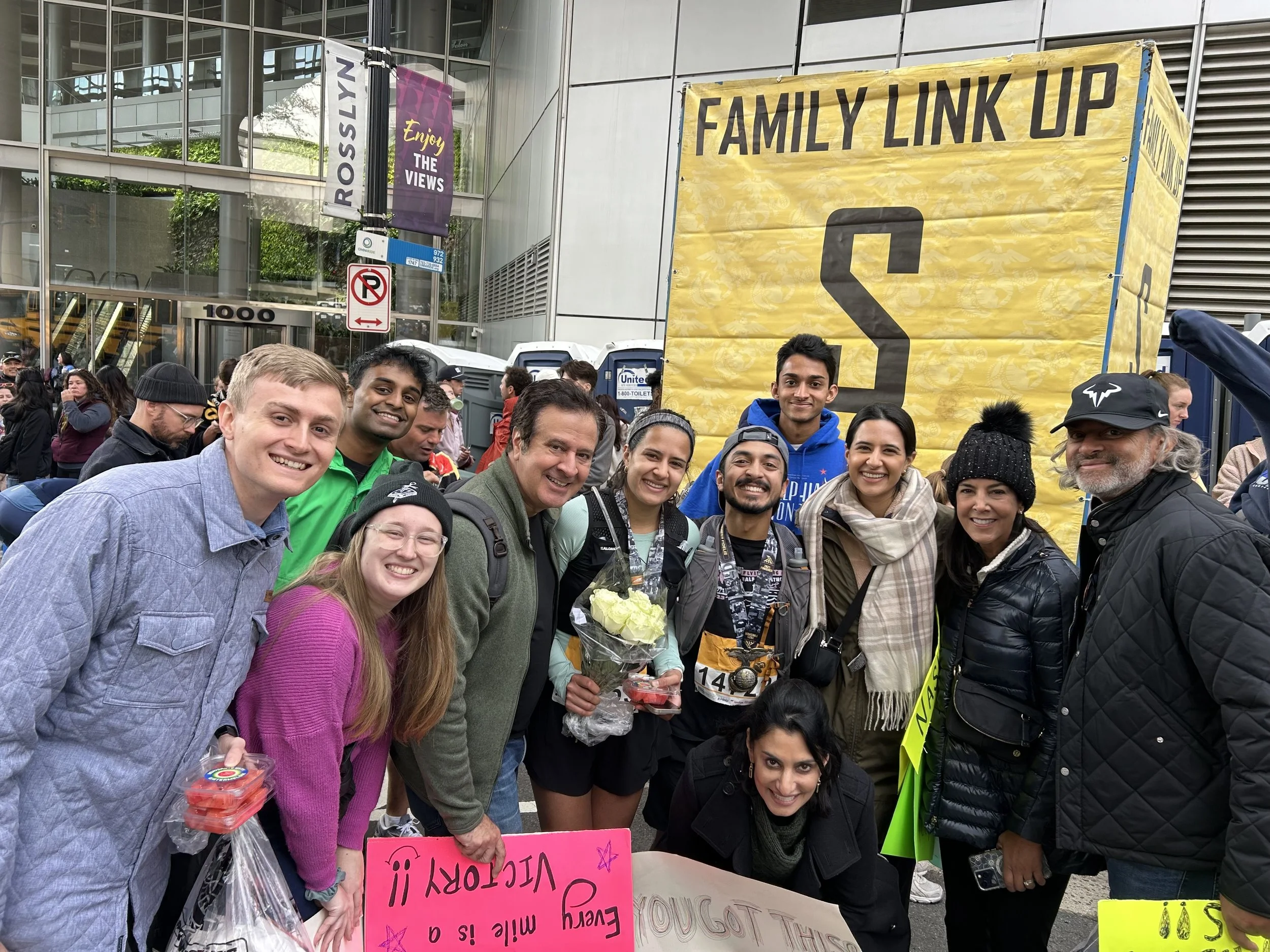
I set out all of my clothes, nutrition, and essentials the night before. I slept surprisingly well for the night before a race day. My family and friends had flown into town the night before to see me race, and they had collectively selected 4 hours of music that I’d be listening to on a Spotify playlist throughout the race. After a short walk to the subway and a couple transfers along the way, I reached the start.
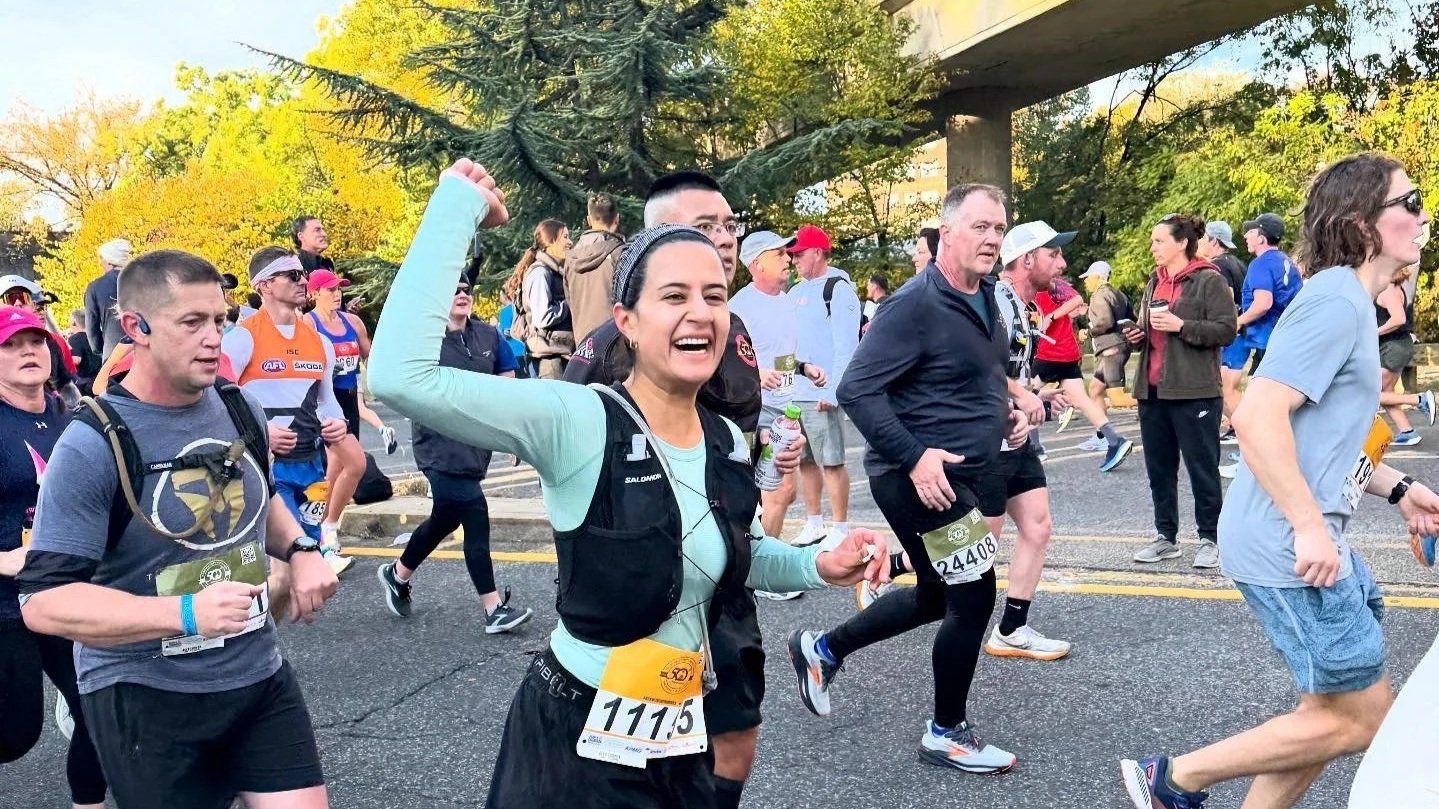
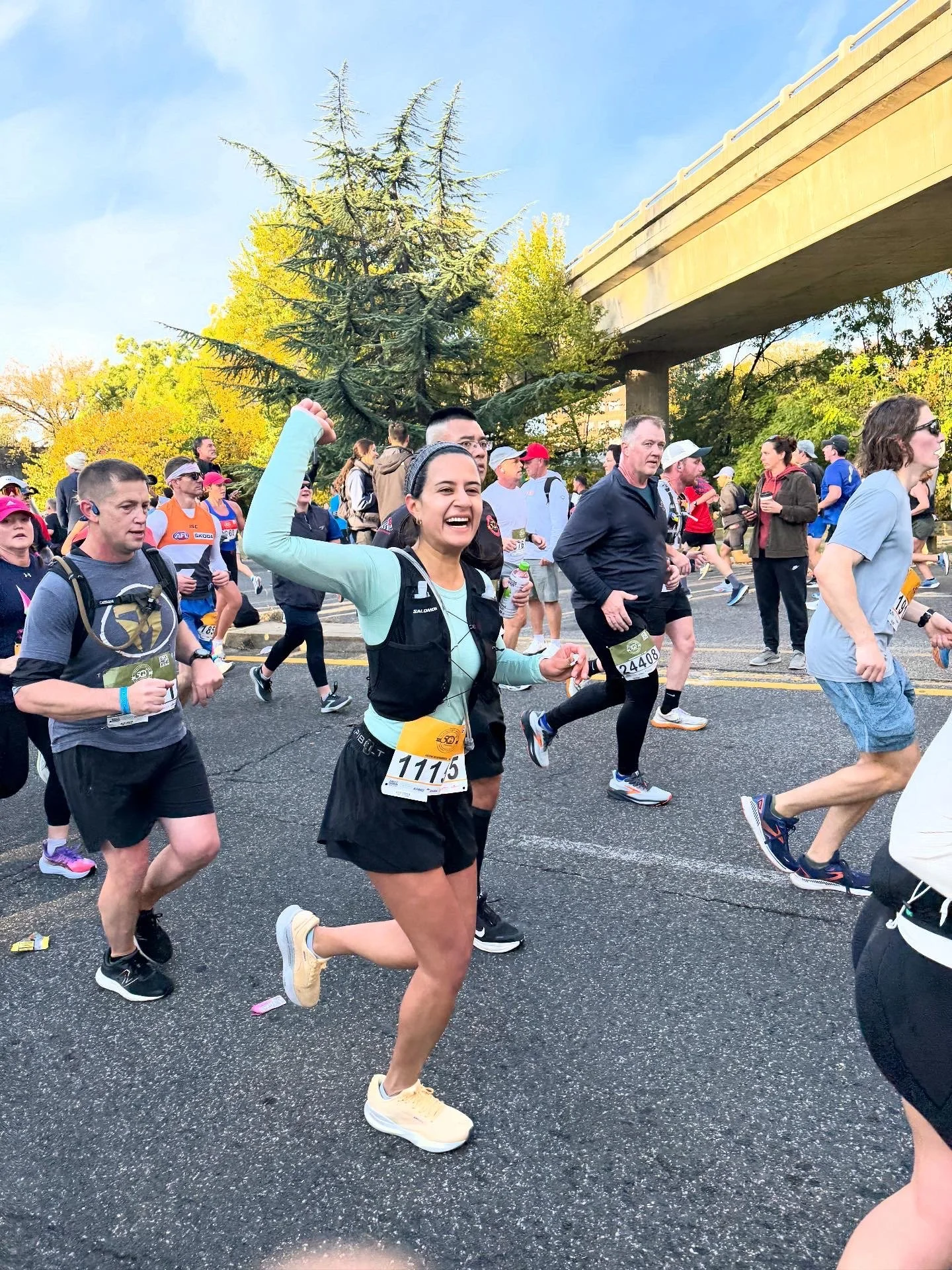
I felt calm and prepared. I was actually excited. The course was supposed to be fairly flat except for a couple hilly miles at the start. I was aiming to finish in less than 4 hours and 22 minutes (a 10 minute mile pace). I started off strong at a sub-9 minute mile pace. I was locked in. The crowd support was unlike any other. There were thousands of faces at every corner and it felt like everyone was cheering me on. I didn’t even need headphones, though I kept them in to stay focused. I kept a steady pace of 9-9:30 minute miles and felt unbelievably great throughout the race, despite my AirPods dying at mile 20. Each time I saw my family and friends, I felt a surge of energy rush through my body. I felt like I was on Cloud 9, until I reached the final hill. Approaching mile 26, there was a steep incline, and I mustered all the strength from within me to climb that last leg of the race. I finished far ahead of schedule with a time of 4:10:23 and crossing that finish line felt like pure bliss.
Inspiration
Learnings
The greatest victories require a team. No great feats are accomplished alone. The support of my family and friends throughout training and on race day was what made it all possible.
Proper preparation is key, but it is equally important to adapt in the moment. There will inevitably be variables you can’t plan for, and it’s important in both running and life to adapt when situations don’t go exactly as planned.
The purest joy comes from consistently doing hard things. The time commitment, mental and physical conditioning, and discipline required to train for a marathon was significant, but the feeling of accomplishment and joy after crossing the finish line made it all worth it.